THE BAROQUE IMPULSE
The Baroque Influence in My Work
The paintings of the 17th and 18th centuries have been of particular interest to me and my development as an artist. I always knew that I first needed to acquire the traditions, skills and techniques of painting. I also knew wanted to make ambitions figure paintings. Therefore, as a student I was drawn to the paintings of Peter Paul Rubens immediately and wished to emulate them. The ambition and scale of these compositions, the subject matter, the richness of color, the sensuality of surface textures and the precision of the drawing was a beacon for me as a painter.
As an historical painting style, I was of course aware that the Baroque no longer seemed to address the contemporary audience. It is antithetical to modern thinking and is certainly more dismissed than revered. However, I was drawn to it and believed this aesthetic could have great merit today if pursued seriously. The fact that Baroque sensibilities went counter to everything in contemporary art made it even more appealing to me.
I knew that I wanted to be a figure painter because I believed the nude figure was at the center of western visual arts and I took it to be a necessary challenge. Michelangelo or Raphael may appear to the obvious choices as models for portraying the human form, but as painter I was looking for more sensuality, texture and color, which I found in Peter Paul Rubens. Where I was at the time living, his large paintings I could not see except in reproduction, and which therefore suffer from great reduction in scale and loss of detail. However, his chalk drawings and oil sketches in reproduction fared better and were very instructive.
This interest and commitment to developing paintings along Baroque lines led to several complications for me which were at the time largely unforeseen. My ideas were based on painting seen in reproduction because the originals were in accessible to me. They were large canvases or murals in churches, palaces, or museums in Europe. I missed the sensation of scale, which is essential and certainly missed the information on how they were painted (how much or how little detail) and how the paint was applied (thickly or thinly or whether a combination of both). The large canvases I did in America now appear to me to have a brittle, flat and overworked surface with too much detail. I painted them as if they were meant to be seen up close, which gives them those qualities. I painted from models life size or over, but with perhaps too much realism for the success of the painting. This was not to be rectified properly until I moved to Europe.
Europe
I knew that most of the paintings I cared about were in Europe in their original locations or on the walls in the museum because too big to travel easily. I knew I needed to spend a significant amount of time living and studying in Europe or even moving there permanently. Happily, the latter happened. I ended in Central Europe, in Prague to be precise, through a combination of reasons and circumstances. The way to Prague lead through Vienna and certain connections I had there. Having ended in Central Europe meant my Baroque inspiration would first be primarily through Austrian and Bohemian Baroque instead of directly from the Roman Baroque. From my new base I was easily able to travel to Rome to study the Baroque, but being in Central Europe exposed to a variant of Baroque which was perhaps more painterly and perhaps more suitable to my work.
My first sustained encounter with the physical paintings of Peter Paul Rubens occurred in Vienna. The Kunsthistorisches Museum and the Lichtenstein collection contain some of the most representative collections of Rubens’ large-scale canvases. I could see for the first time how the paintings are organized and how the paint is applied. This led to a renewed focus in my own work.
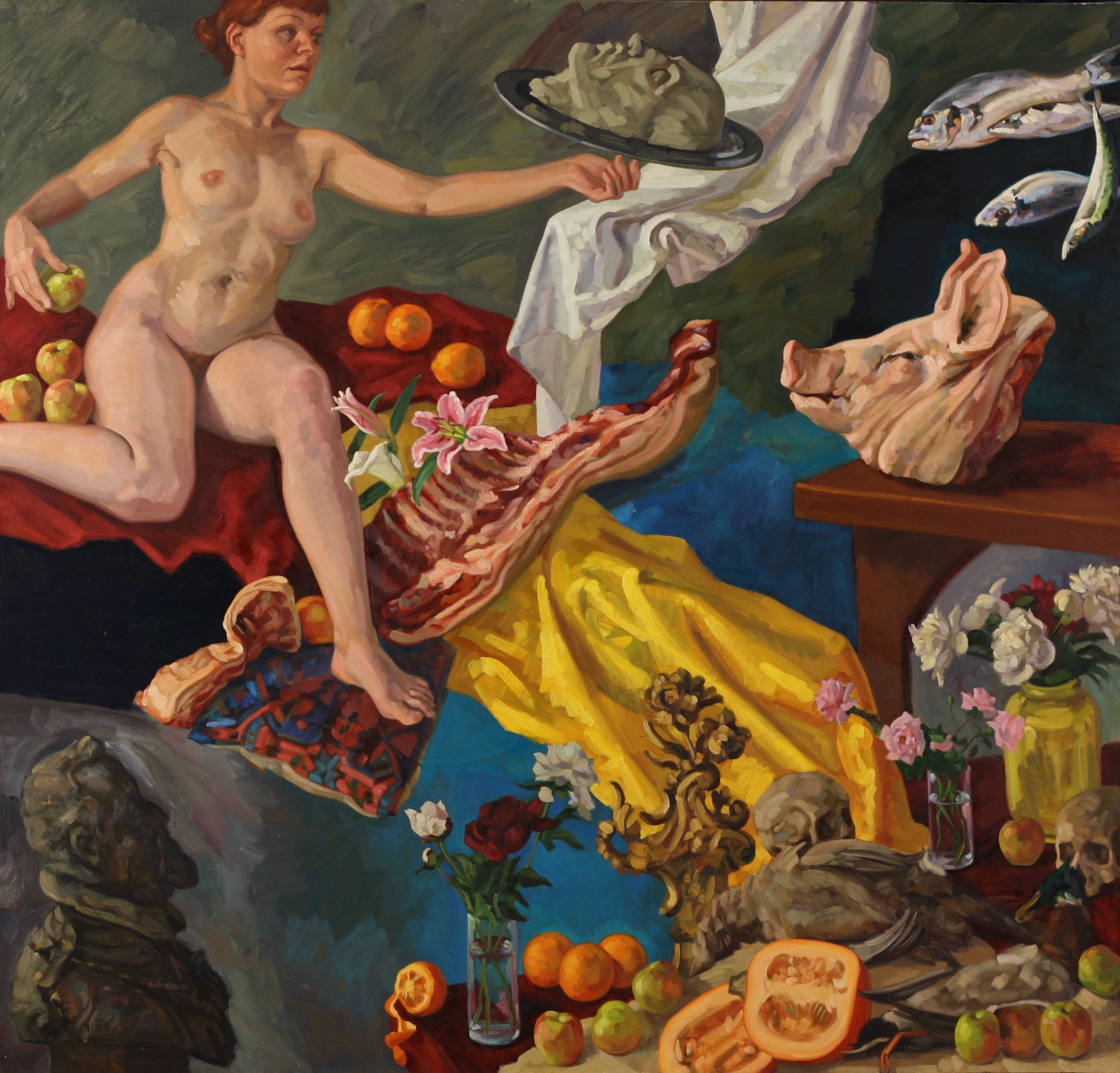
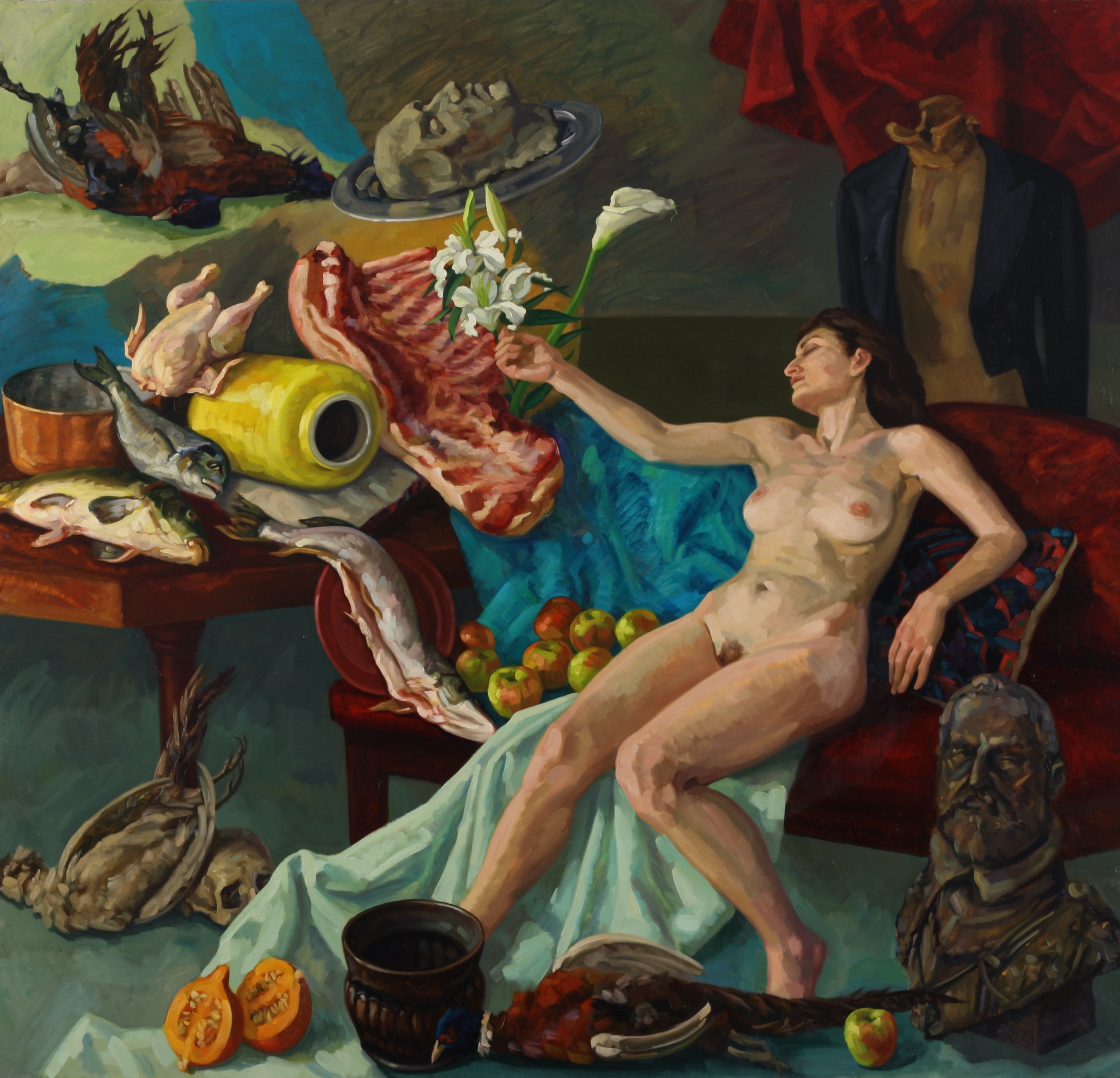
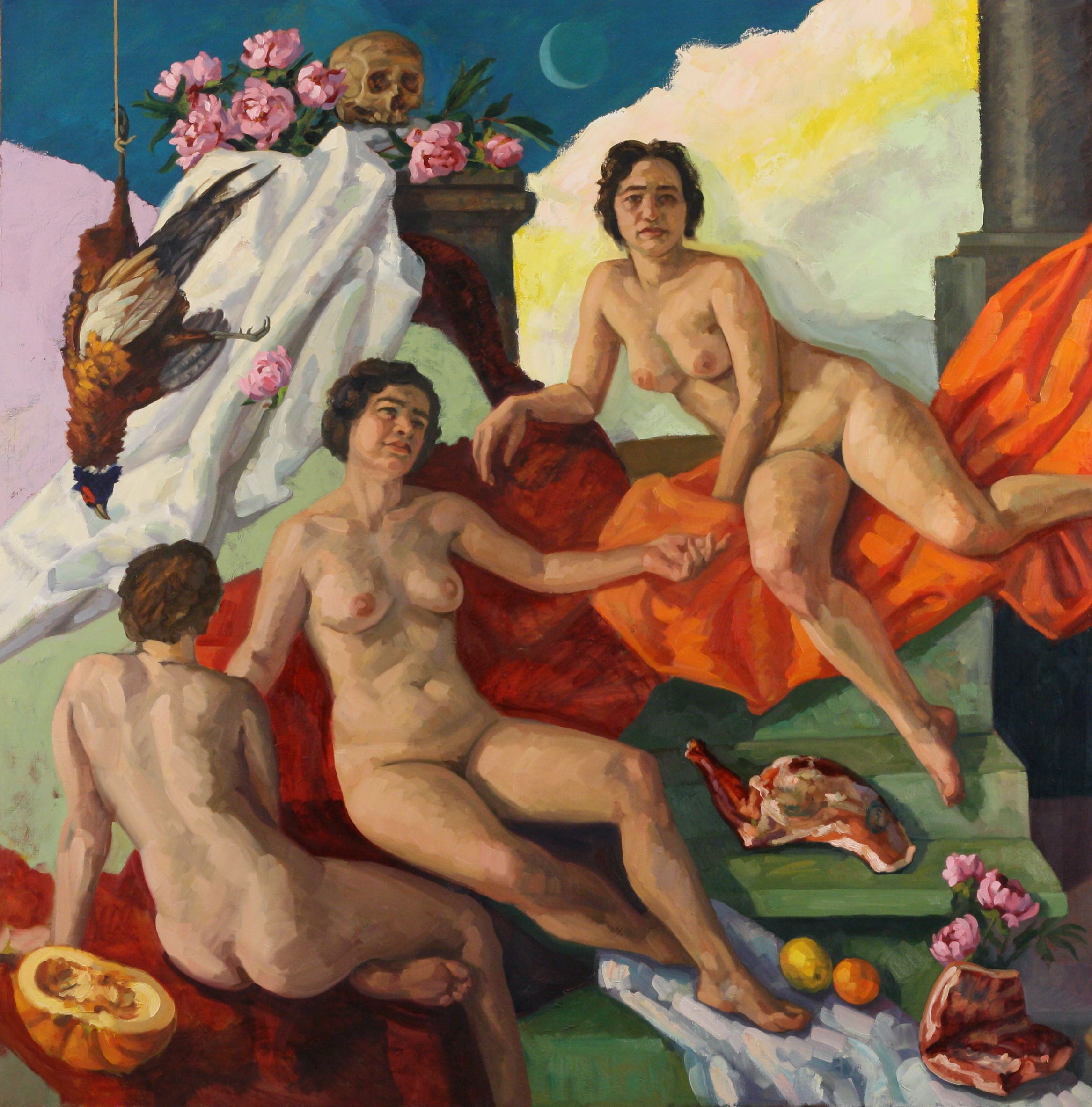
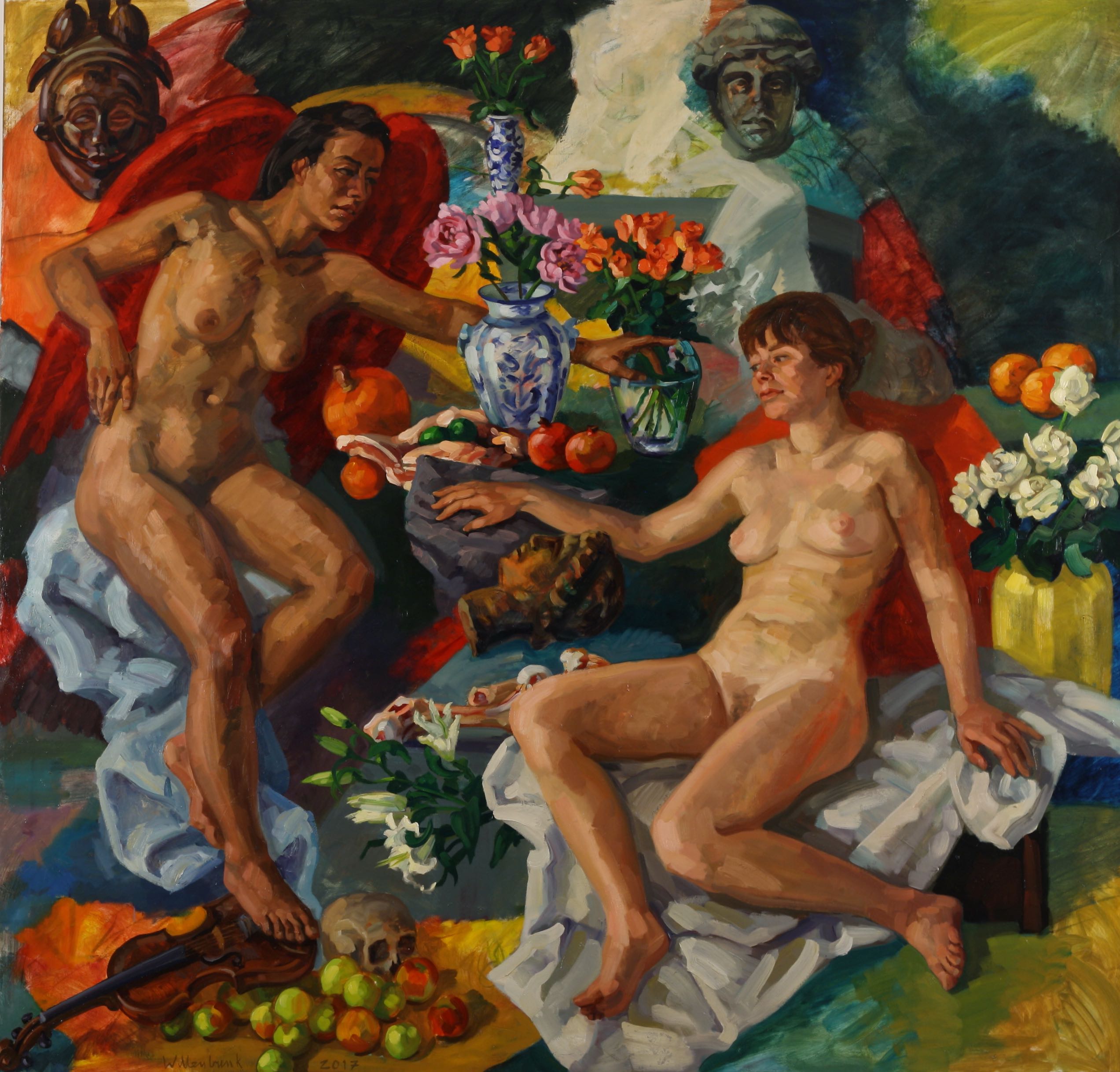
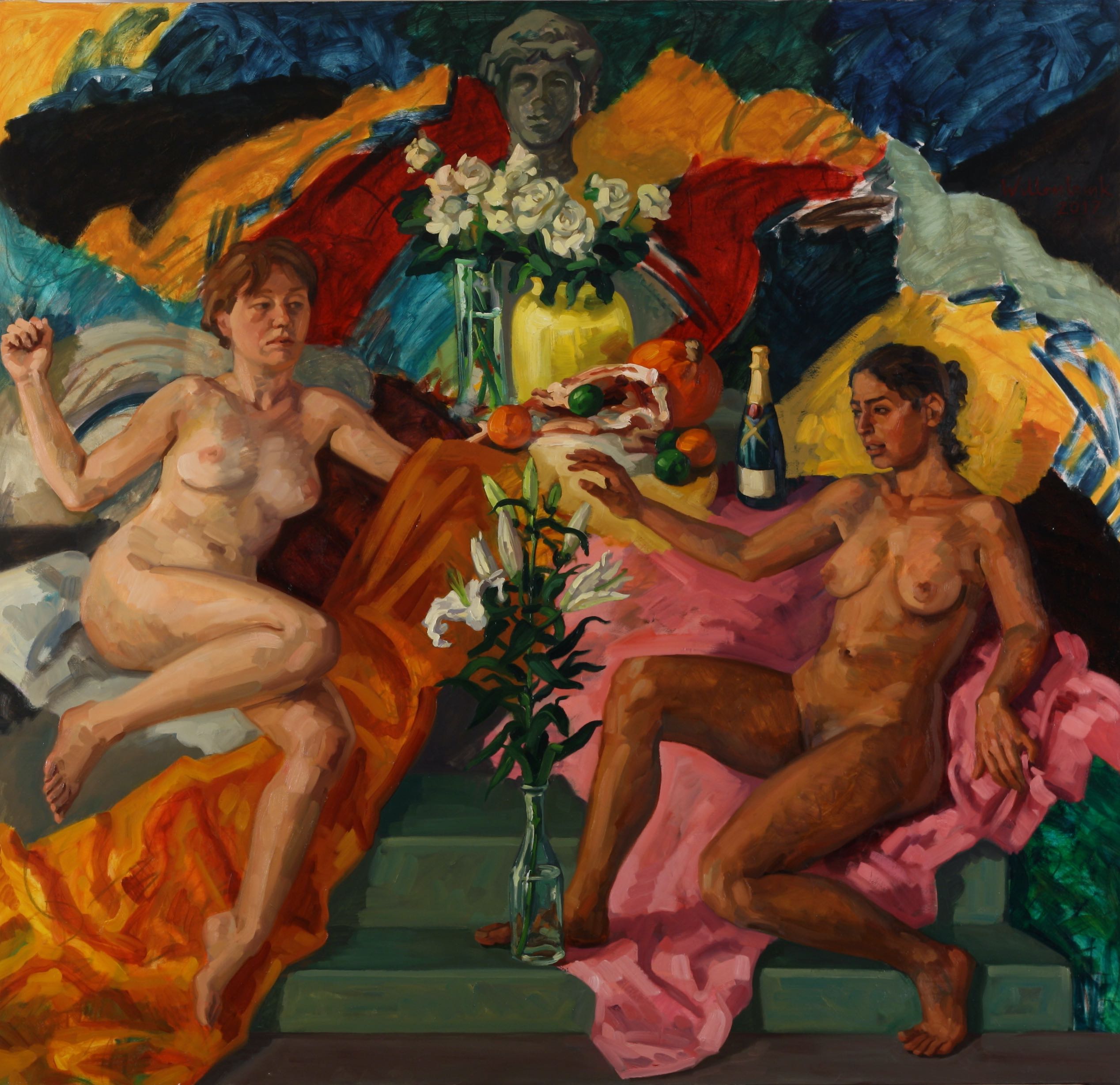
The obvious characteristic of Baroque paintings are scale, dramatic movement, emotion, rich color, sensuous brushwork, light and space and what is otherwise known as Grand Manner history painting. A perhaps less obvious quality in these Baroque paintings is realism, however, I have always worked directly from observation especially regarding the figure and related still if elements. The composition, background and secondary elements in my paintings are often invented.
My version of the Baroque was relatively simple. I focused on one or two figures of approximately life size in a relatively shallow space and close to the surface of the canvas. As much as I admire Ruben’s and other Baroque painters, I did not want to create deep space with many figures in complicated poses. Primarily because I thought this would be too much of an historical reproduction of the style and I wanted a modern statement inspired by Baroque but not reproducing it. My paintings emphasize the picture plane which is a modern aesthetic. The scale of these works remained relatively large since the figures were life size or in many cases over life size.
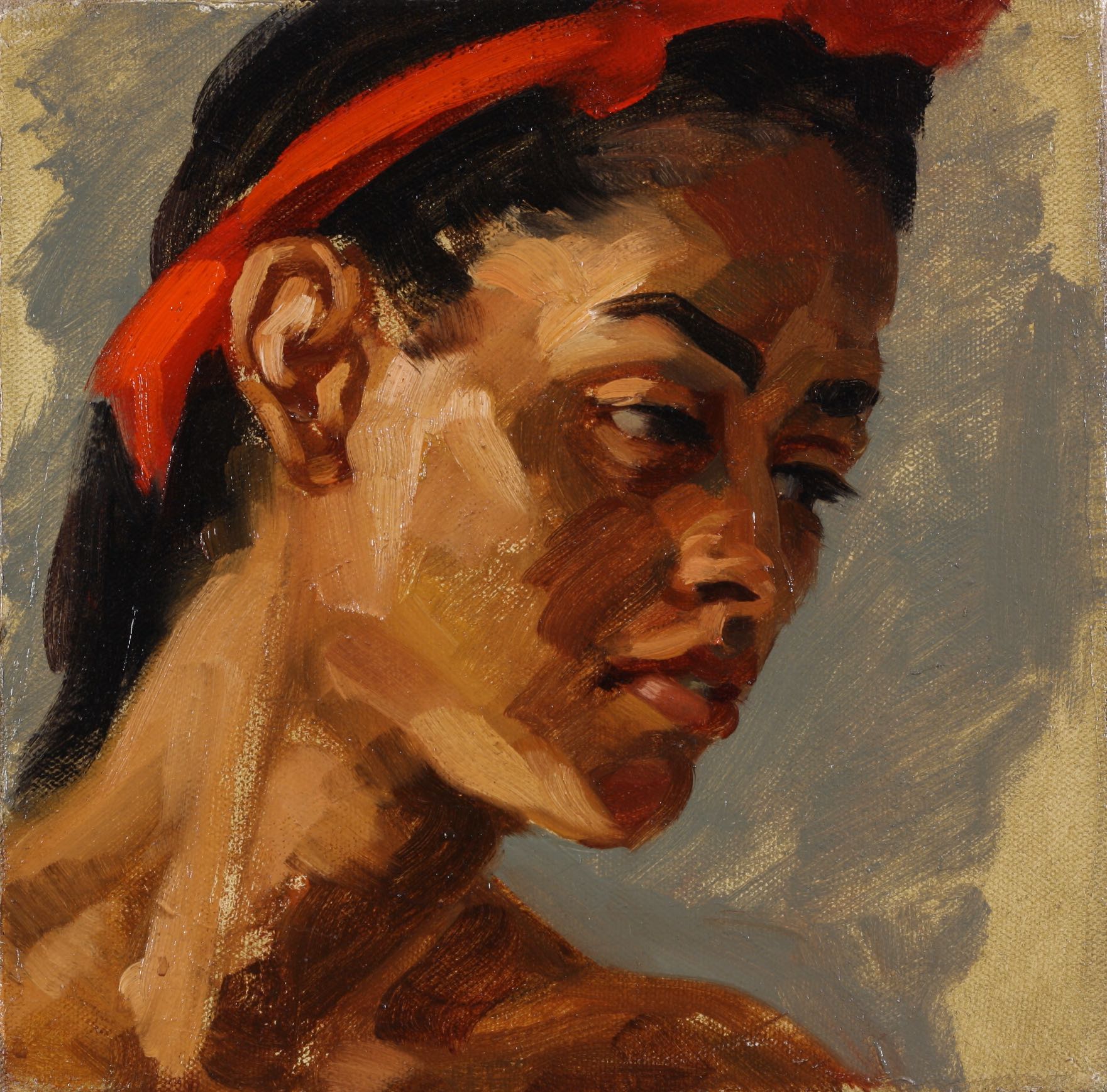
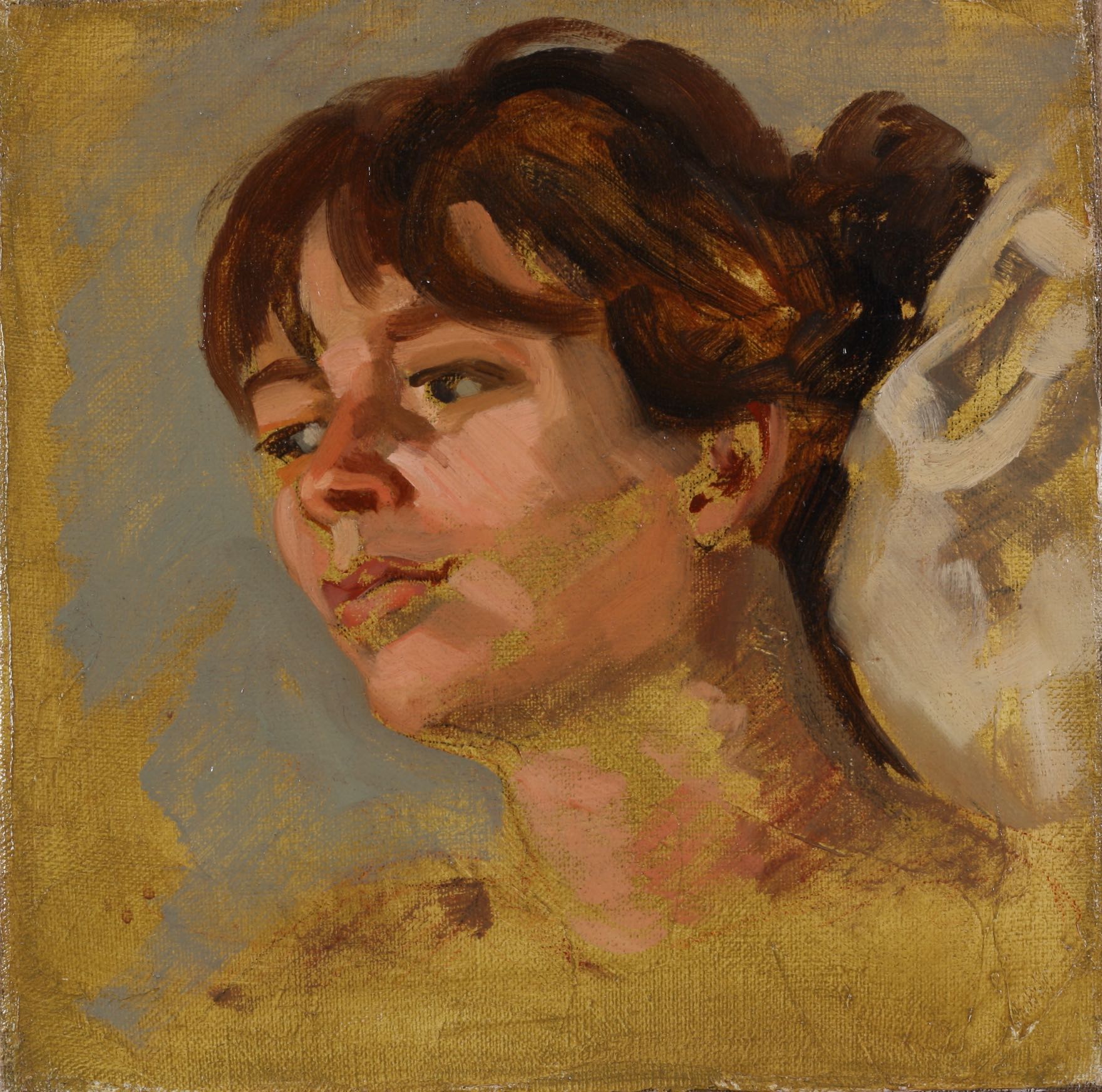
The scales of my paintings were inspired by the vast canvas I saw in Vienna or in Roman Churches, palaces, and museums. This scale has a disadvantage in making them difficult to transport and even sell. The contemporary collector does not often have a church or palace to hang his collection in. I was not concerned with this when I painted them. Scale was important to my conception of my work, but less practical in most every other sense. However, the smaller compositions and oil sketches that I did seem more accessible to a contemporary public.
Central European Baroque Examples
A great revelation to me was the Baroque art of Austria and Bohemia which I now found myself emersed in and which was unknown to me in America. Both Prague and Vienna are rich in Baroque Architecture and paintings. I was astounded by the frescos of Franz Anton Maulbertsch which I found accessible throughout Austria, Bohemia and Moravia. They have a distinctly modern feeling in the nearly abstract use of bold, strange colors along with extreme expressionist drawing and handling of paint. All of these qualities had a great impact on the development of my paintings. A similar fresco painter whom I became aware of in central Europe was Cosmas Damian Asam whose has an important ceiling painting in Prague but is more visible in Bavaria.
The Baroque sculpture I was able to see in Central Europe also had a powerful effect on my paintings, although perhaps less directly. In particular, the work of Matthias Bernard Braun influenced me with the flowing movement and expressionist direction of his sculpture. They even seem quite painterly and modern.
Content and Concepts
The subjects and idea in my paintings are similar to Baroque themes, but not too closely related and more contemporary in meaning. I derive subjects from traditional mythology and history as used by Baroque artists, but I try to make the references less clear or obvious. I also try to use lesser-known myths or even some of my own invention. The mythology in my work is more poetic or obscure. My intention is that the poetic or mythological subject it not to be read directly but mainly that the final painted effect is felt subconsciously.
Even though there is a Baroque influence on my work, I mainly express modern ideas and aesthetics in my paintings. These are contemporary and modern paintings which only embrace aspects of historical paintings. This I hope creates a kind of tension and interest in the work.